TLDR Summary
More packaging does not always mean better protection. The goal is to use enough material to protect the product without adding unnecessary cost, waste or complexity.
Protective packaging has one main job: helping products arrive safely.
When businesses experience damaged deliveries, the natural reaction can be to add more packaging.
More void fill. More tape. A larger box. Another layer of cushioning.
But overpackaging can create problems of its own.
The best packaging does not necessarily use the most material. It uses the right protection in the right places.
What is overpackaging?
Overpackaging happens when a product uses more packaging than it reasonably needs for safe storage and transport.
That can include:
- An unnecessarily large outer box
- Excessive void fill
- Multiple layers of cushioning with little added benefit
- More tape than the carton requires
- Additional materials added because employees are unsure whether the standard method is enough
Some products genuinely need substantial protection.
The problem is not using plenty of packaging when the product requires it. The problem is using extra material without understanding whether it actually improves protection.
More packaging can mean higher costs
Every additional packaging material has a cost.
That includes the purchase price, but there can also be less obvious costs.
Larger cartons may take up more warehouse space. Extra materials take longer to handle. Employees may spend additional time wrapping and securing products.
Across hundreds or thousands of orders, small amounts of unnecessary packaging can become significant.
Reducing overpackaging does not mean cutting corners.
It means identifying where material adds genuine protection and where it does not.
Bigger boxes are not always safer
It can be tempting to assume that placing a fragile product inside a much larger box gives it more protection.
In reality, additional empty space can create another problem.
If the product can move freely inside the carton, it may repeatedly strike the surrounding packaging during transport.
Businesses then often compensate by adding large quantities of void fill.
A better approach is usually to choose an appropriately sized outer carton and use internal packaging that holds the product securely in position.
Protection should focus on vulnerable areas
Different products fail in different ways.
A glass bottle may need protection around its body and neck.
A picture frame may be particularly vulnerable at its corners.
A laptop may need need cushioning around its edges while preventing movement inside the box.
Understanding those vulnerabilities makes it easier to provide targeted protection rather than simply surrounding every product with as much material as possible.
This is one reason product-specific packaging can be effective.
Consistency can reduce unnecessary material
Overpackaging is not always caused by the packaging specification itself.
Sometimes it comes from how individual employees use it.
If employees lack confidence in the standard packing method, they may add extra material “just in case”.
One person might use twice as much tape as another. Another might add extra void fill even though the product is already securely protected.
Clear packing instructions and repeatable packaging methods can help reduce these differences.
Employees should know what materials to use, how much they need and how the finished parcel should look.
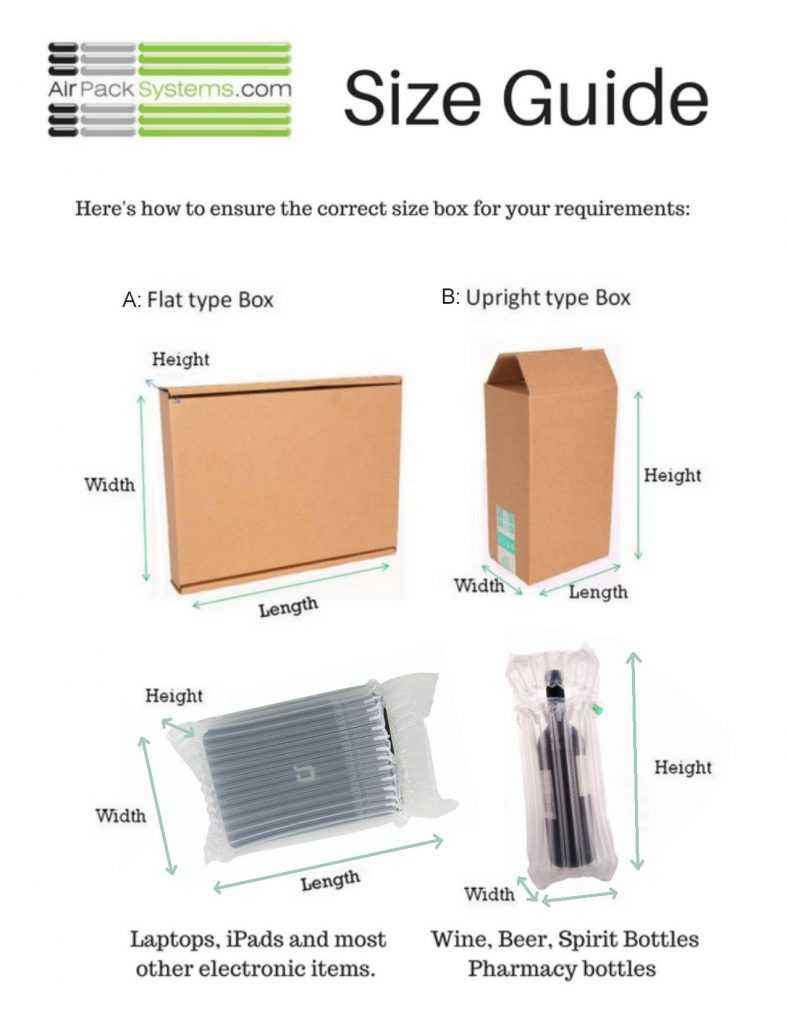
Inflatable packaging can provide targeted cushioning
Inflatable protective packaging creates cushioning using air chambers around the product.
A correctly sized inflatable bag can help keep the product securely positioned while providing protection around vulnerable areas.
This can reduce the need to fill a large box with additional loose material.
AirPack bags also arrive uninflated, allowing businesses to store larger quantities without the warehouse space required by bulky pre-inflated materials.
Our inflatable bags are 100% recyclable and made using 30% recycled material.
Less material should never mean less protection
Reducing overpackaging should not become a race to use as little packaging as possible.
Removing necessary cushioning cushioning simply shifts the problem in the opposite direction.
Damaged products can create:
- Replacement shipments
- Returns
- Additional transport
- Extra packaging
- Customer service costs
- Lost product value
In many cases, preventing damage is far more efficient than dealing with the consequences afterwards.
The aim should therefore be optimisation, not simply reduction.
Test before making changes
If a business believes it may be using too much packaging, changes should be tested rather than guessed.
Try comparing different packing methods for the same product.
Consider:
- Does the product move inside the box?
- Are vulnerable areas properly protected?
- Is every material serving a clear purpose?
- Could a smaller carton work?
- Are employees adding protection beyond the standard method?
- Does the packaging still perform reliably during handling and transport?
Testing can help identify materials that are genuinely necessary and those that provide little additional benefit.
The right amount is better than the most
Effective protective packaging is about balance.
Too little packaging increases the risk of damage.
Too much can increase material use, cost, storage requirements and packing time without providing meaningful extra protection.
The best solution protects the product efficiently while keeping the packing process simple and repeatable.
At AirPack Systems, we supply standard and bespoke inflatable protective packaging designed to provide targeted cushioning for a wide range of fragile and valuable products.