A packaging solution can look perfectly suitable at the packing bench but behave very differently once it enters a real delivery network.
Drops, vibration, stacking and repeated handling can expose weaknesses that are difficult to predict by appearance alone.
That is why packaging testing can be valuable before businesses commit to shipping large volumes of a product.
Why test packaging before a large rollout?
If you are introducing a new product, changing packaging materials or increasing shipping volumes, discovering a problem after thousands of orders have already left the warehouse can become expensive.
Testing first gives businesses an opportunity to identify potential issues on a much smaller scale.
This can help reveal:
- Too much movement inside the box
- Vulnerable corners or edges
- Insufficient cushioning
- An outer carton that is not strong enough
- Packaging that takes too long to assemble
- Inconsistent results between different packers
Finding these issues early makes them much easier to correct.
Start with the product itself
Effective packaging testing should begin by considering what you are actually shipping.
A heavy automotive component does not face the same risks as a laptop, glass bottle or lightweight electronic device.
Important factors include:
- Weight
- Shape
- Fragility
- Product value
- Protruding components
- Sensitive surfaces
- Distance and method of transport
The packaging should respond to the risks associated with the individual product rather than relying on a one-size-fits-all approach.
Test movement inside the package
One of the simplest checks is also one of the most useful.
Once the product has been packed, does it remain securely positioned?
Excessive movement can allow the product to repeatedly strike the inside of the carton during transport.
Internal protective packaging should keep the item stable while providing enough cushioning to absorb impacts.
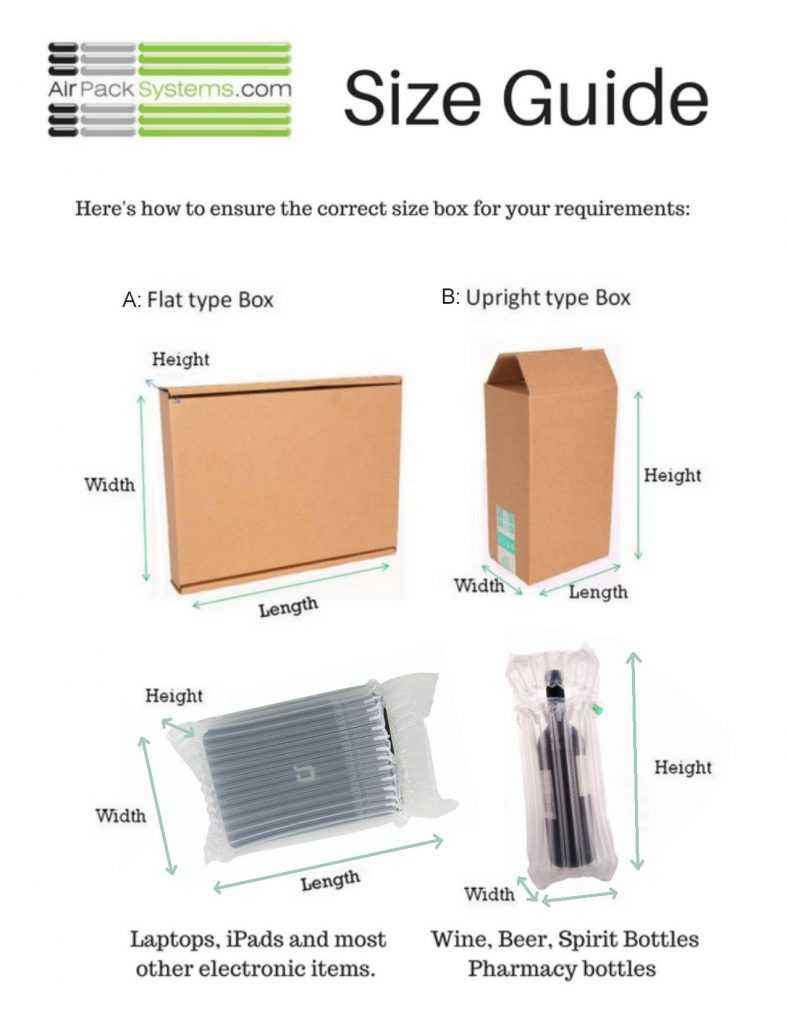
Inflatable packaging can help by surrounding products with air chambers that hold them in position while creating a protective barrier between the item and the outer box.
Consider drops, vibration and stacking
Parcels rarely remain completely still throughout their journey.
They may travel through sorting facilities, delivery vehicles and distribution hubs before reaching the customer.
When reviewing a packaging solution, businesses should therefore consider how it might cope with:
- Drops and knocks
- Continuous vehicle vibration
- Repeated lifting and handling
- Pressure from surrounding parcels
- Stacking during storage and transport
The aim is not to make a package indestructible. It is to provide an appropriate level of protection for the conditions the product is likely to encounter.
Trial shipments can provide useful information
A small number of real-world trial shipments can also help businesses assess a new packaging solution.
Rather than immediately changing packaging across every order, you can monitor a smaller batch and record:
- Whether products arrive undamaged
- The condition of the outer carton
- Customer feedback
- Packing time
- How much material employees use
- Any recurring weak points
This information can help businesses make evidence-based improvements before increasing volumes.
Don’t test protection alone
Packaging performance is about more than preventing damage.
A solution may protect the product extremely well but create other problems if it is difficult to store or takes too long to pack.
A useful packaging trial should also consider:
- Packing speed
- Ease of use
- Storage requirements
- Consistency between employees
- Material usage
- Presentation on arrival
The best solution should balance protection with practical day-to-day operation.
When bespoke packaging makes sense
Testing sometimes reveals that a standard solution simply does not fit the product properly.
Perhaps the item has an unusual shape, a particularly vulnerable component or too much room to move inside standard packaging.
In these situations, bespoke protective packaging can provide a solution designed around the product’s dimensions and specific protection requirements.
At AirPack Systems, we can develop inflatable packaging for products that need something beyond a standard bag or box.
Review the results and keep improving
Packaging testing should not necessarily end after the first successful shipment.
Products, couriers, order volumes and customer requirements can change over time.
Businesses can continue monitoring damage rates, returns and packing performance to identify whether the packaging still meets their needs.
Small improvements can often make the overall shipping process more reliable and consistent.
Final thoughts
Packaging should prove itself beyond the packing bench.
By testing how a solution performs before shipping at scale, businesses can identify weaknesses, compare alternatives and make improvements before problems affect large numbers of orders.
Effective packaging testing can help create a more reliable process while giving businesses greater confidence that products will arrive in the condition customers expect.
At AirPack Systems, we offer standard and bespoke inflatable packaging solutions for a wide range of fragile, valuable and difficult-to-pack products.